Friday, March 31, 2017

Crazy Cool


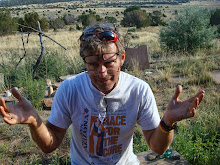
DJ, aka Little Crab, Anthony, aka Wha-chu-PEH (Catfish), and Sean, aka Tikon (Small Gift), are seated on the plank benches of the dinner hut in La Chunga, a small village up the Sambu River in the Darien Province of Panama. We are four hours or so by boat from the nearest road of any consequence. Some people call the place the Darien Gap, the empty hole between the north and south ends of the Pan-American Highway. It's got a bad reputation for guerilla hideouts, drug running, people smuggling, and hungry bugs. Lots of mud and jungle too. But we are talking life here at the table with DJ, Sean, and Anthony. These guys rock the world of hope and possibility. For two years they have been living with indigenous communities as Peace Corps volunteers in conditions that most of us in the material abundance of the developed world would find dangerously primitive: no lights, no running water, no access to easy food, oppressive heat and humidity, and regular bouts of irregularity and infections. They are givers and love being part of something bigger than themselves. Yes, they are doing aqueducts, eco-tourism web sites, and "charlas" about HIV and birth control, but they are also river-runners, surfers, rock climbers, dancers, and are lucky at dice and love. Dang! How did I end up here?

Thursday, March 30, 2017

Working Late in La Chunga


Short. Really short. Stocky too. He's ahead of us on the trail at two in the morning. Shirtless, clad only in threadbare shorts, he emerges from the darkness into the light of our lamps. He holds a hand-carved paddle, cocobolo, rosewood for English speakers, the kind used for dugout canoes for traveling up and down the river to places like La Chunga. The tide was coming in and the water rose high in the channel. Frogs hunted spiders. Spider eyes by the hundreds shown in the light of our lamps. "Busco una embarcacion, " (I'm looking to get on a boat) he said to DJ, our guide back out to the big river, the Sambu, and our lancha back out to roads and buses. He said this into our little sphere of light and its swarm of mosquitoes and gnats. "Pero no hay barcos," (but there aren't any boats) he mused to no one in particular. He was mostly deaf, seventy something, widowed, and rumored to be the best pig hunter in the village. He worked all the time, day and night. DJ told us he was one of the old timers of the village, a real traditional Embera man, one who knew the ways of animals, birds, fish, plants, spirits, and water. He sighed at the lack of boats before he stepped forward in the direction from which we had just come. Darkness closed in behind him. I watched him fade into the night, he who knew the way in, before turning to follow the others, all of us on the way out. 

Wednesday, March 29, 2017

Up and Down Mazlow's Hierarchy


We were off schedule. Eight hours ago we left Panama City with the plan to arrive here at the bridge over the San Felix River before sunset. The sun had set an hour before, and I was just now getting my pack off the roof rack of the little bus at the end of the line.

No more motors. We would walk from here up to Sean's site, Cerro Pita, in the dark. There was no moon, just stars and our headlamps to light the way. Sean, of course, just set off across the bridge with no light. Dayna, my niece, a climbing guide, had a lamp that was dying. She didn't mind. I had my freshly charged monster of a light and felt a bit goofy for being so gear-obsessed. Megan had lost her light, so I gave her my back-up.

A small parade of lamps in a sea of darkness, we set off across the suspension bridge into the next chapter of our Panama trip. Within minutes, sweat saturated my shirt and pants. I may as well have jumped into the river for how soaked I would be for the rest of the hike.


I have my doubts and fears. Ten months ago I ruptured my Achilles tendon. It still hurts. It has not been tested. I am aware of the rocks, the slippery dust on the inclines, the unfamiliar surface of the road. It is dark. I don't know whether or not I have what I will need to be here. I don't want to get sick. The heat takes my energy. I feel old. Sounds, smells, strangeness assault my calm. I am a bit on edge, but take steps, breathe, let go. Life is right here, immediate, no intermediaries or provisional comforts that let the mind wander. 

We pass houses of canaza (bamboo) and thatch. Wood cooking fires light the interiors. Emaciated dogs bark, but only as announcement. I feel no threat like I had from the guard dogs of the city. The dogs here are family dogs, hunting dogs, work dogs, and are always hungry. An atmosphere of hunger hangs over the area. People subsist on rice and beans and fruit, but there are always hungry times. It is summer here, the dry season. Food is running low. It's time to clear "monte," wait for it to dry, burn it, and then sow seeds for the coming rainy season. The crops will come up fast in this rich, life-crazy climate.

Cicadas buzz in the trees along the trail. Click, click, click, ZZZZZZeeeee. The noise drills into my skull. I remember it from last year. It rises and falls as we make our way to the road that will climb up to Cerro Pita.

We pass others on the trail. Women wear naguas, a kind of tent dress, hand-made, with bright trim around the collar and across the waist. They are made with hand-cranked sewing machines. Most of the children are in shorts, shirtless. The men wear hand-made trousers, beat-up T-shirts, baseball caps, and rubber boots. Young guys dress with brand-name style and wear sun glasses.

In the dust I see prints of horses, dogs, bare-footed adults and children. A big scorpion scurries in and out of the circle of light cast by my lamp. We join the road and begin the steep climb. A fine dust fills the beam of my light, as fine as flour. I settle into the rhythm I used for high mountain ascent. The pack is full of groceries and the usual stuff of first-world travel.

We crest the first of several long climbs and then drop down into a narrow defile, cut by floods in the rainy season. Sean says that the "gente," the Ngbere (NO - bay), don't like dropping into the thick forest lining the stream. They say the place is haunted by demons. As we enter and the stars disappear beneath the cover of trees I get a creepy tingle. A big toad hops in front of me; another scorpion cuts across my path. A bat dips into my light before darting off in another direction. No more wood smoke, but the air is thick with flowering and rot. The woods are crawling with life.

My tendon throbs with the strain of the incline. I have to be careful not to push it too hard. I stop every couple of minutes to recover, to let the sweat run down and off my fingers and toes. I am utterly saturated in a film of sweat.

The cicadas sing. Exotic scents waft from the forest. We split a chocolate bar at one of the saddles. Sean is excited about seeing his cat, Wilson, and his dog, Chaco. He wants to get back to his "tabla" house. No flush toilets. No electricity. We will have to get water from the spring down the hill and carry it up if we want coffee in the morning. Well... Yeah!

The climb evens out after an hour and a half of slogging up and down the steep terrain. The Ngbere were pushed off the flat and fertile lands to the south by the big banana companies many years ago and have been relegated living off the less productive slopes of the cordillera. History has not been kind to indigenous people here or elsewhere. Money is scarce. Some of the old men have never been more than thirty miles from the place they were born.

Life travels in tight circles here in the comarca.

I see Sean up ahead, and he turns off the road toward a compound of low thatch houses. His host family is still awake, the abuela cleaning up from dinner, the abuelo hanging out in a hammock. No TV, no radio, no music, just cicadas and other night sounds.

I too climb the bank off the road to the houses. Wilson, the cat appears from around the corner. He is tiny, skinny, an afterthought of a fat first-world cat. Sean lifts him and sets him on top of his pack. Wilson settles there, like a sphinx, and purrs.


Sean will sleep on the bare boards of the floor. Dayna on some clothes put together into crude pallet. Megan and I on Sean's foam mattress. He will light a mosquito coil. The smell of palo santo will fill his house. Wilson will hunt bugs. Chaco will guard the house.

I read quotes written in chalk on the walls of the little house. Paulo Friere, Whitman, and good old Ed Abbey are all represented. Abbey's words, "You can't know the darkness by flooding it with light" ring particularly true.


After we haul water, we will make some tea. Tomorrow Sean will make coffee grown a few feet from his front door. We'll have rice, boiled green bananas, chicha.

There will be time for stories.

Friday, March 10, 2017

Getting Ready to Visit My Son Who Is in the Peace Corps in the Jungle of Panama


Twenty four hours from now I will be on a plane to Panama. Before trips like this I tend to get jitters about all the things I will likely forget. You know: fingernail clippers, batteries for the headlamp, essential oils for jock itch. My mind goes into "How will I survive without all my stuff?" mode. As a first-world material boy, I balk at the prospect of being without, living on third world offerings. Yes, we will eat rice, beans, and peppers. I might even be hungry once in a while. And I might get a bit sick. But I have my Cipro, health insurance, and a plane ticket home. I have to remember that this sense of entitlement is a luxury few (in terms of percentage of the world's population) can afford. So tighten your belt, pilgrim, and suck it up for a couple of weeks. Very likely you will survive, if not learn something about real life, a hard lesson in the way things are.

Thursday, March 9, 2017

So There I Was


My collar turned up against the cold, hands shoved into pockets of my trench coat, and cigarette burned down to the nub, I walked away from my last chance to be happy. Or so I thought. The gray sky pressed down like a slap, and sleet pelted my bare face. This was a lonely sidewalk in a dark part of the city. My feet hurt. I wanted to get back to the office where I might get warm, but I had no office, only the street and empty pockets. It's a long way to the bottom, but you get there eventually. The wonder of it is that you have nowhere else to go and a great sense of relief in having lost everything. It is then that you cut the cords holding you tied to all that old shit that hasn't worked so well after all. The drama of it gets old, and, if you're up for it, you can be done with it.  Free at last. A sharp knife, a keen and committed mind, is all you need really. Make it quick. Hold still now.

Wednesday, March 8, 2017

Whose Story Is This Anyway?


If countries, like people, live to imagine and compose a narrative arc by which we live and act, then it is time again to claim the authority to write the story of America that rings most true. The narrative of my America veers toward openness and experimentation, connection and interdependence, opportunity and inclusivity, restraint, stewardship, and responsibility when necessary, generosity and hard work. I find the narrative of fear, of serving only the interests of the wealthy and powerful and, yes, white, to be a story of compression rather than expansion. Tax cuts for the haves, deregulation, and short-term, environmentally blind development do not tell my story of what my America might be as we move into a future world populated by a world of nine billion other storytellers. What works best for most of us? How do we imagine ourselves as heroes of our bigger story, the one that calls us to stretch and give?

Tuesday, March 7, 2017

Upping the Ante


The next dance has taken on more urgency. It seemed that the night would go on and on and that time would graciously let me dawdle until the moment felt "right." Well the moment doesn't quite feel right, but the lights are going dim. It's about closing time and I'm still sitting here waiting for someone else to step up and make a move. My beloved doesn't even know that I am here, fixated on her from a safe distance. She's been dancing with the bold ones. I can't blame her. She's doing what she has to do. How can I move when I'm stuck here, sitting on my hands? Time to put the chips on the table, bet the farm, see where the marble lands. Better to hear no after joining the game than to still be sitting here when the lights go out and the final tally is taken.