Tuesday, June 15, 2010

A Love Story


He traveled a long way to get there only to realize it wasn’t where he wanted to be. But there was no way back, so he ended up staying.

After a while he fell in love with a beautiful woman who only vaguely acknowledged him. He tried his best to win her, but the more he wanted her the less she would have to do with him.

Other women offered themselves to him, but he continued to beat his chest in the conviction that she was the only one who could make him happy.

A priest told him “find yourself” when he asked how he might win the beautiful woman. And so he tried. He looked hard into a mirror and began to see something there that soothed him and made his desires palatable. 

The people in the town noticed the difference. Even the beautiful woman paid him more attention than she had before, stopping occasionally to talk and share tea. He confessed how he always wanted to be loved, to be possessed and consumed by love. She admitted to feeling equally strong hungers and began to offer herself to him more and more as something strong grew between them. Time passed, making them older, more transparent, softer somehow. He felt pulled toward her, and as he grew toward her, he came to know himself, realizing that possession was impossible, longing inevitable.

He was not where he thought he wanted to be, but he no longer felt the need to strive to be someplace else or something other than what he was. They told him that life could never give him enough, but he felt that it was more than enough to be part of something larger than he could comprehend. He found himself turning around to give more to life, feeling that he could never give enough, that the turning world could never know enough of his ever deepening desire.

Thursday, May 13, 2010

Profanity

I stood at the bus stop and watched the three lanes of passing traffic, waiting for my ride. My dad was visiting and had volunteered to pick the boys up from school. We had planned to go to an early movie, but doing this required that we cut the margin for logistical error to fractions of a minute.

They were supposed to be here by now, those three in a brown car with a bike rack on the top. I had told them where I would be waiting twenty minutes ago. There was room to pull over out of the heavy afternoon traffic, but no shade, and the sun began to bother me. It was nearly June in Tucson and the desert was heating up. At two thirty in the afternoon it must have been pushing a hundred degrees.

I read the flow of traffic like words, looking for the ones that meant something to me, trusting that my mind would ferret out the salient passage, that one line that I was looking for. The sweet, single, unique passage, a little Toyota, had to appear sometime.

“Goddammit” I muttered to myself, noticing that since my dad had been staying with me and the boys my swearing had returned to its previous frequency and rancor. My dad was full of “son-of-a-bitches,” “fuckin’” thises and “fuckin’” thats. He is a good man, but lived a hard life as a career military officer. To survive, he tapped into the power and poison of the profane. It was not his fault that I was sliding back into my rages of words but mine.

The result of several years of effort and self-searching into examining and controlling my profanity had disappeared in less than a week. “Goddammit,” I said again, this time with some real irritation. I was working myself up.

My dad and I share a deep rage at being slighted. He was a boxer and used to get into fights if he felt someone had insulted him somehow. My brother is the same way and will defend himself with force if he feels someone is assaulting his dignity. The two of them are righteous men. And I was becoming more righteous by the second as I continued to watch closely but disinterestedly the traffic passing the bus stop.

Maybe they misunderstood me and were waiting somewhere else. I had given directions to the bus stop quickly and mentioned a corner three blocks down, where they were supposed to turn. He had asked me about the street names then, when we had made our plan, with some urgency, more than I would subscribe to a simple turn. Maybe they were waiting there.

I looked at my watch. We weren’t going to make the three o’clock show and they were now twenty-five minutes late.

I decided to stay where I was because that is where I said I would be. I’m sure that my dad was staying where he was because that is where he felt he was supposed to be. I was sure he was swearing at the fuck-up, as I was.

I decided to give it five more minutes. An ambulance went by and I noticed smoke from a house fire a few blocks away. A flash of dread passed through me. What if the boys had been hurt? Surely my dad couldn’t survive another accident like the last that had left him with a shattered hip, knee, and shoulder nearly severed. I forced the thought from my mind and looked again at my watch. Time to go.

I swore and watched how the anger and irritation spread through me like a warm chemical wash. I tasted salt and dissolved metal. I rehearsed our conversation and defended myself. “I said the bus stop . . . what are you guys doing down here?” I knew that path well and moved down the sidewalk spitting fire, daring any to fuck with me. “Goddammit,” I repeated -- my mantra around which I centered my life, my way of being, my esteem.

Within two blocks I saw them coming and my dad pulled over. Sean, my seven-year-old asked “Where were you?” with a worried face. “I was waiting at the bus stop,” I answered, looking to defuse my anger, my need to make someone else wrong. My goddammits retreated behind a need to get on with things, to plan the afternoon from here, to make the best of what we had. It took a while for the poisonous invocations to pass, a moment to rekindle a reverence for for the world as it is.

Wednesday, January 13, 2010

Watering the Mind


You were born with a wonderful mind, a mind with potential, with something wonderful -- an intelligence.
Intelligence opens doors where none were before visible. Like the Red Sea parting when Moses stepped into it, chaotic experience suddenly has a path and a pattern. Intelligence can read, interpret, solve and apply. It helps to get things done, but not by itself. It is dangerous when misused with power, if it marries a rigid morality, and become ruthless if living isolated, capable of opening mega can of cruel whupass just for fun. It travels with attitude and consciousness. The work intelligence does depends, in part, on the company it keeps.
Some call intelligence talent or capacity or genetics. Some got more than others they say and that’s just the way it is, part of God’s master plan. That’s not to say it only comes in one variety. Intelligence can be the word as much as the dance or the empathy. But not all are valued equally. The ones that maintain existing power relations get more air time, bigger pieces of the pie. It may be physical, but it’s also political.
Intelligence can be lost, abused, underdeveloped and exploited. It’s a fragile, ephemeral resource – mercurial, fleeting. Too many of the wrong kinds of drugs can demolish the strongest of minds. Too little love can turn it into a monster.
The greatest houses of intelligence crumble eventually into dementia, distortion, madness, before the light finally flickers out. So water your intelligence and be careful to whom it listens. Give it problems to solve; give it good food; take it along as you learn to dance using new steps; stretch it by speaking a new language. It will repay you if you treat it well and leave you if you neglect it. Within it lies the capacity for great work as well as the arrogance of a petty tyrant. Who shows up as a product of your intelligence depends as much on how much you care as on the wiring you inherited.

Thursday, June 25, 2009

Owl Things Rise and Fowl

The owls are back. The first time I saw them they flew delicately and silently around my head, literally in my hair, after I barged into their dormitory. It took me a minute to realize they were not bats, but my wide-eyed visitors. Their mastery of the air impressed me. They did not seem to mind at all the close space of my outdoor storage ramada and moved through it like dancers – cutting tight turns, pirouetting, climbing, stalling as they settled onto a comfortable perch suitably distanced from the clumsy interloper. I apologized and retreated. 

All three of them are here. Up close they are petite, tiny, fragile. They perch on my hanging bike wheel, my chainsaw case, a section of copper pipe, and they defecate on the tires, frame, toolbox, plastic storage organizers. I don’t mind, but also see some of the perfection of that. They show me my priorities. I would rather have a wild owl living in proximity than a clean bike, even though I am a bikophile.

Where do they come from, these beautiful little western screech owls? Last year they appeared and roosted in Kyle’s book shelf on the porch, as if they could sense someone in trouble, tormented, and were there to add an archetypal touch to the melancholy scene. 

When I see them in the morning, they are resting, their eyes half closed, like they are looking over a pair of reading glasses at an annoying student. I like to think that my talking to them as I put in laundry keeps them calm, that I won’t disturb their siesta. I hope they are accustomed enough to my interruptions that they will not fly away to a more remote roost. I want to check on them, the way I used to check on the chickens before the bobcat took them. 

I prefer the owls. As a lazy farmer I would rather not feed my flock, but am glad to provide wild fowl with a coop. A bird raiser by chance, an owl cultivator, a gardener of wild things, a witness to a world as far beyond my control as it is hungry for life.

Monday, April 13, 2009

Rising Waters (Written September 12, 2001. A True Story)


It is hot here in Tucson, record hot, and news of September eleventh -- only yesterday -- keeps coming in. No one seems to know what to do. For lack of anything better I wait for rain. 

It’s humid. We all sweat. Clouds gather, and we hear thunder, but the promise of rain is not kept. Only dry lightning, fires on the ridges. The swamp cooler doesn’t work. What rain does fall drizzles down with no result greater than dust stains on the windshield. People around me seem heavy, tense. When we move, anger and fear swim beneath the surface of our bearing, waiting for the slightest provocation. Viscera are on alert for fight and flights.

I park my truck after listening to yet another story on the radio of someone not coming home from the Pentagon, the World Trade Center, the crater in a Pennsylvania farm field. Impotent frustration, rising from columns of smoke and flame and then dust from the collapse of the Twin Towers, eviscerated from without by an unknown enemy, has me looking for someone to take it out on. News of layoffs, of plunging stocks, trigger a fear of the unknown, which creeps slowly under my skin. I am a temporary worker, paid when money is plentiful. The news is not good.

As I spread the windshield shade and lock it into place with the visors, tucking it neatly into the joint between dashboard and windshield, I notice a man walking toward me across the parking lot. He is pushing an ancient, rusty, deformed bicycle. I wonder what he is doing here in my parking lot, my jealously guarded little corner of the university, my territory, my one small perk for being a low rung college teacher. He looks at me before I decide to make a break for my office and my dark thoughts. I want to be alone rather than acknowledge him or anyone who might want a part of my attention. I am consumed by a need to brood. 

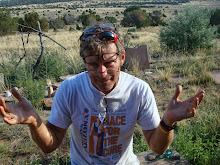
“Hey big man, you know where the VA hospital is?” he asks. The man is as grimy as he is black. He also happens to be wearing a torn and dirty T-shirt with the slogan “Grace Happens” dancing in joyous script across his chest. “I’ve got a hole here over my heart and they said they were going to take some skin from somewhere else and fill it in. I got to get down there to see a counselor, God willing.” 

I speak literally here. The hole in his chest is real, measurable, fleshy, exposed. He is standing in front of me, one hand over his heart, the other grasping that misbegotten hulk of twisted metal and rubber that will never again in this world move without being dragged. 

Around us the university is gaining momentum for another day. The hum and rip of traffic beyond the wall speaks of a world at speed, in action, moving faster and faster toward… what? Affluence? Retirement? War? Beautiful blonde women wearing shorts that ride low on their hips and tight tube tops sling backpacks over their shoulders and chirp off toward their classes. In front of the sororities, boys in monstrous SUVs kiss girlfriends before the girls climb down from the trucks and stride sleepily up the sidewalks to the grand front doors, where other girls wait to hear the stories.
This man, standing in front of me with all he owns, is telling me he has a hole in his chest. 

What the hell does that mean? 

His pants hang loosely, too big around his waist, heavy and caked with film and fumes of the street. What is he doing here? I can’t think about a hole in someone else’s chest. 

“It’s somewhere down on South 6th Avenue, about ten miles from here,” I tell him, looking closely at him as he pushes his broken steed toward me like Don Quijote leading Rocinante to the windmill. He is lean and muscular, sunburned, with cracked lips. 

“It’s a long bike ride,” I say. His hands grip the sun-rotted grips on the bars of his dilapidated machine and his eyes go filmy. 

The morning sun is already hot and I feel the first rivulets of sweat run down my back, and heat rising from the asphalt parking lot. 

“Well, this here bike doesn’t work, locks up every time I try to pedal it. It’s not like those bikes now that do just about everything except pedal for you.” He smiles at the thought of this, amazed at what wheels like that might do for him if he had them. “So I’ll need to take a bus. Big man, if it was you askin’ you know I’d give it to you. In Bakersfield, where I jus came from, the fare is seventy-five cents. I figure it’s more here. Can you spare the two dollars, big man?”

I think for a minute and remember that I had given my last singles to my son for hot lunch and have only a ten and a twenty. I tell him I’ll check and that I would ask in the office the best way to get to the VA hospital. As I turn to the building, he starts to walk away. I wonder if he is leaving, but check my wallet first and then my pocket for change. He sees me digging and slumps perceptibly when I put away my wallet, turn back toward him, hand extended with a few coins.

“You know it’s a help, big man. God bless,” he says as I give him the change.

“Go down to Fourth Avenue,” I say, pointing toward the mountains, “and then follow the street that way,” pointing again, “under the tracks. You’ll be downtown then and the transit center is just a few blocks from there. They’ll tell you how to get to the VA hospital, if there are buses running that way during the strike.” 

Shit, I think, that’s right. There’s a transit strike that has limited buses to all but the most necessary routes. He’ll be lucky to find any way to get to the VA. I tell him this. His expression doesn’t change with the news. He looks at me kindly, with a hint of something – pity? compassion? – smiles, and turns. 

He waves goodbye, his back toward me, already hunkered down into his journey and walks off, away from the mountains, in the wrong direction, as I stand there, briefcase in hand, still watching him, wondering if I should drive him, at least to the transit center, or give him the ten in my wallet, or offer to look at his bike to see why it locked up, but instead I open the door and slip into my air conditioned office and make a list of the things I need to finish today in order to keep my job and maintain a delicate, invisible veil between me and the street, me and raw grief for strangers, me and the people who fell from the sky in clouds of pulverized concrete and steel girders, me and this strange, helpless need to do something. 

I keep wondering about the hole in that man’s chest, now swept away by the tides that rise and ebb in my own. Now if the rain would just fall, in curtains, for days.