Monday, July 20, 2015

Shifting


One could say that I have been stuck too long in the same job, same place, same ways of thinking. Routine has been helpful in keeping the chaos of parenting and house-holding somewhat manageable. It has been a necessary part of my surviving the strain of constant bills, low wages, and mountains of details.

But I feel like I am heading for a cliff if I don't change direction. With so much momentum, though, I find it hard to try on anything new.

Then we took a road trip up to Seattle where I rode the StP, the Seattle-to-Portland bike ride. Bikes have always been a way to cope for me. Years ago, I used to take summer trips to places like Moab, Utah, where I and my fellow lunatic cyclists would lose all track of decorum. We would camp in the desert and laugh at the moon.

This trip rekindled some of that. Seattle's exotic setting of ships, bridges, rivers, and mossy trees threw this desert dweller into a kind of culture shock or very stimulating disequilibrium. I had fun. Yikes! That was scary.

I wanted to run back to Tucson and get back into my mind-numbing routine as quick as I could.

But it was not to be. After StP, we went to Sisters, OR, for a family reunion. There I was shaken further still by sun, trees, glaciers, rivers, a vision of a life beyond teaching that shook me to my marrow. I think I had the best day of my life riding a bike over McKenzie Pass.


Sun. Wind. Mountains.

One afternoon, some young people and I went to a place called Steelhead Falls. They showed how to fly off into space over cold, fast moving water and then thrill to the frigid river. I had to join them.


I have tasted the dream. On one hand, I can die now in peace. On the other hand, I want more. More creativity, more risk, more nature, more friends, more beer, more nights out under the stars.

But, of course, it hard to change anything, and I have a contract. I am not wealthy. I have commitments.

But I can do more of what makes me thrill and sip the nectar of purpose and meaning. I have to find the courage to shift.

Eight hundred miles later, with these thoughts running through my head, my faithful Subaru lost its capacity to change gears. The hydraulic clutch died and I was stranded. But where did it leave me? Downtown Moab, next to the Visitor's Center. No shifts it said. You need to look at your need to change gears it said. You are stuck and you need to do something about it it said.


Very well, I replied. I took my bike off the car and rode blindly around town. I came to a street that looked nice and rode over to a park. I was grateful and looked to the sign for the street's name. All it said was "Mi Vida."


There was a smell of flowing water in the air. The scent whispered that it is time to change gears, but I will have make changes to do that.

Thank you Suby. Thank you road.

For now, I am stranded. With any luck though, tomorrow my fine friend will be ready to run, shifting like a demon.


I hope I will find the strength to do the same.

Friday, July 10, 2015

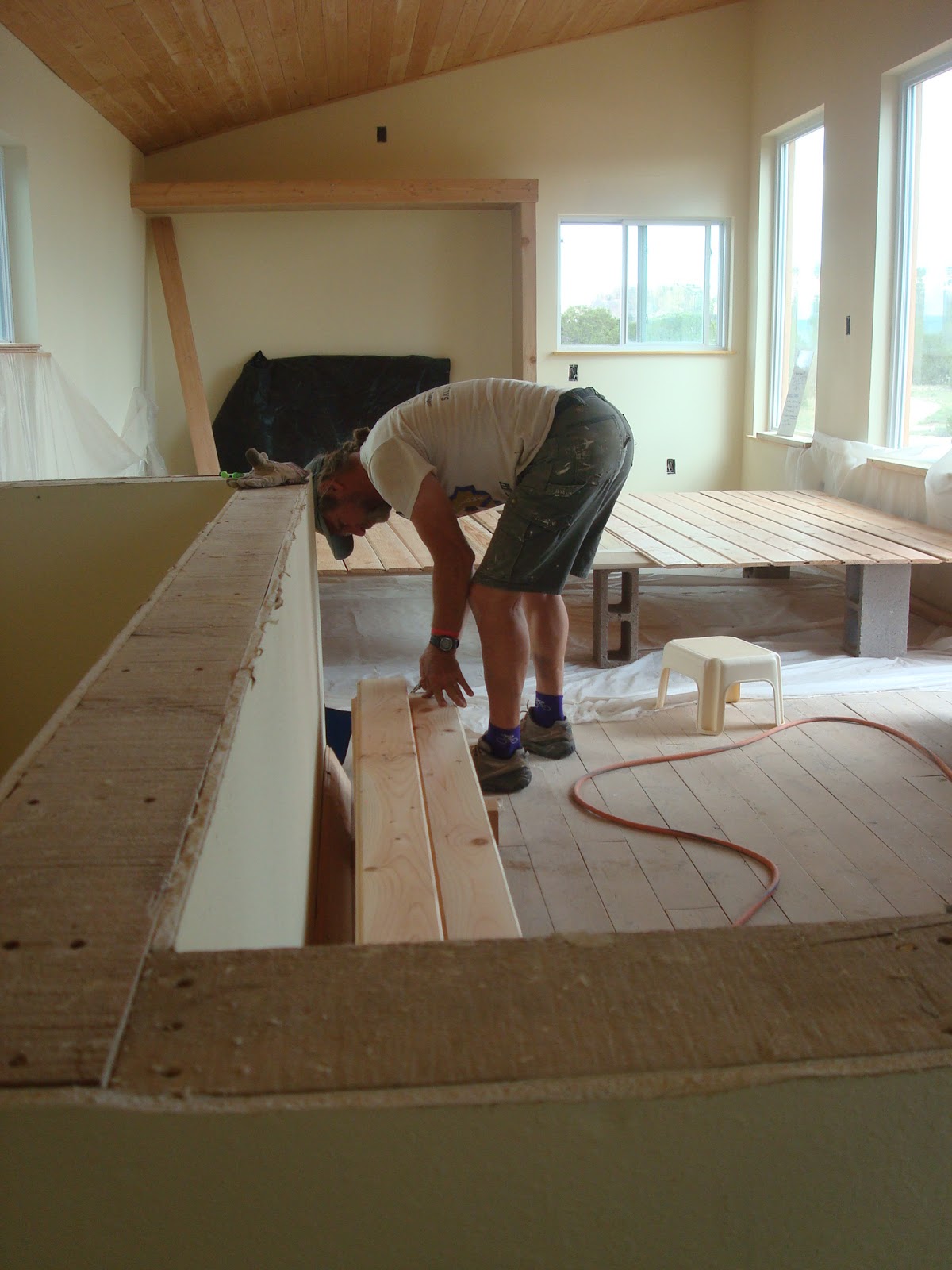
Building a House So My Soul Has a Place to Stay When It Comes Home


Many friends ask why I spend summers working on a house in the boonies of northern New Mexico. The pat answer, one that satisfies because it is something that most can understand, is that it will be a "retirement home."


But that does not really get at the heart of why I am doing such a thing. There are psychological dynamics at work that are hard to convey in polite small talk. Those reasons run deep.

Before I go there though, I have to say that I don't know what or why, exactly, I am doing this. I just am because it is there and I can. The reasons are revealing themselves as the project progresses. What emerges later may give more insight than I have at present.

So, a long time ago, I was asked to put my playful little kid on the shelf. Because my father went off to fight wars and I was the oldest boy, I was the "man of the house." Of course, I wasn't really, but I was in that role anyway. I needed to find out how to do things like fix leaky sinks and change flappers in toilet tanks. I also served as a kind of confidant for my mother.

My role felt more "adult" than kid.

All of this is subtle, but I forgot how to just play and be creative, imaginative. I pushed a now angry little kid into the shadows of the psyche.


Fast forward about fifty years, and I am now crippled by depression and anger and need to get off the work treadmill.

The house represents a place where I can begin to woo that crazy aspect of myself back home. It will take some time and some quiet and patience. I may have to sit on the deck and sing sad songs to the changing light on the rocks in the back yard.


But I think he might hear me. And, if he comes back, we might have some things to talk about, some peace after all these years.


Friday, June 12, 2015

An Admittedly Stereotypical Vehicle Danger Index for Cyclists


Yes, it is mentally lazy to generalize in general and to stereotype in particular. We classify at our peril and much harm can come from reducing people to a simple "type" based on single traits.

That said, I have observed first hand certain patterns of behavior from drivers of different types of vehicles. That is not to say that everyone who drives a certain vehicle is destined to behave in a certain way, but most, or least many do. Some stereotypes contain grains of truth, but many thinkers remind us that though they may be true, they are also incomplete.

I'll grant you that. So consider this index/rant with the knowledge that there will be exceptions to the rule, drivers who defy the types presented here. From those drivers I ask pardon.

Here, in ascending order of danger to cyclists are my rankings of what to expect from drivers of the following vehicles.

10.) Subarus. Drivers of Subies tend to be polite to excess. They slow down for cyclists, roll down windows, wave, smile, and will even offer money or rides to stranded cyclists. Drivers of Subarus also seem to be suckers for lost causes. They display bumper stickers asking that we "Save the 13 Striped Mud Puppy From Evil Pit/Mountain Removal Poison Mines."

9.) The Toyota Prius. This driver is a close second to the Suby driver, but is often too consumed with stories on NPR or distracted by thoughts of their treatise on the sex lives of banana slugs to wave or offer rides or money. They will, however, offer up an absent-minded smile as they pass. Even the women seem to have nicely trimmed gray beards.

8.) Overloaded semis hauling copper ingots from the local smelter. These drivers will politely follow you up a steep grade at eight miles per hour until they can safely pass, taking up the entire oncoming lane, with deafening acceleration to ten miles an hour. My guess is that they are paid by the hour.

7.) Vehicles driven by other cyclists. These are usually recognizable by stickers, bike racks, neurotically meticulous maintenance, and good stereo systems. Why they are a "7" is because they are a little too comfortable cutting it close and passing at speed. They too much like going fast, but will thumbs up as they recede rapidly to the horizon.

6.) Delivery vans that do not allow cell phones. Drivers of these vans seem wide awake, focused on driving, and alert to your presence, but they are so bored by the lack of digital distraction that they hate you and the entire project of having to live without a screen. They scowl as they give you the legal three feet.

5.) Any group of teen-aged revelers. These sixteen-year-olds are still trying to be good drivers, but are so suffocated by peer pressure that they sometimes forget that other people use the road. Their transgressions into the bike lane are usually more about neglect than malice.

4.) One sorority girl driving her mother's Acura coupe.

3.) Two or more sorority girls in their father's BMW SUV. These vehicles pose real dangers, especially at stop signs, cross walks, or bike lanes near any university. These are seen as unnecessary distractions from the next texted "OMG!"

2.) Monster SUVs. Usually sporting Christian fishes or bumper stickers telling all to get right with God, these Chevy Suburbans see cyclists as morally bereft, not fast enough, or certainly not Christian. They belch exhaust and contempt and moral high ground as they take up every inch of road. (Jesus would not have driven a Suburban, and, if he did, he would take it easy and share the road, I think.)

1.) Dodge Dually-Wheeled pick-up trucks.  These drivers seem to delight in buzzing cyclists, driving with one wheel in the bike lane, cutting it really close, sending clouds of black, stinking diesel smoke in our direction as they send us the flying bird.

So there you have it. We cyclists have to share the road with these drivers, their personalities and tastes, and world-views as expressed by their rides. Of course, we drive too. I drive  a Subaru or a pick-up truck depending on my degree of anger at my fellow human. I try to be good, but am one of "those motorists."

And I know that the nicest person on Earth is out there in a Dodge pickup bearing no malice to anyone while he flaunts the bumper sticker "If you can't Dodge 'em, Ram 'em."


Wednesday, June 10, 2015

The Promise of Rain


They drive in silence to the mountain. There is too much to say after so many years apart. It has been like this since she met him at the gate. He emerged smaller, tarnished, humble. She stepped out of the car and took the passenger side to let him drive. Even a hug seemed too much. That was an hour ago, late, still hot.

Beneath the silence is a log jam of words and time and needs.

The headlight illuminates a smooth, black highway that slices the saguaro forest. Ocotillo branches etch the rose colored sky like upside down spiders, spindly legs reaching for something solid in the air. The road cuts an angled line onto the naked ridges that spread out at the base of the range. It rises relentlessly, a perfect incision along the contours of the front slope before turning into the defile of Molino Canyon.

Lights of city fade behind the shadow of the ridge, and the road tilts up, now between sheer granite walls. Cacti surrender to dwellers of higher country. Scrub oaks replace the saguaro along the murmuring stream down in the gorge. The car passes a sign saying they have climbed a thousand feet. Water plunges over a ledge of banded gneiss into a pool where tiny frogs have gathered to mate and feed on the abundant bloom of fireflies.

Still the road climbs. It is the fruit of  blood, the labor of prisoners who wielded hand tools to carve this lifeline between the heat of the valley and the heights of the mountains; it is the gateway to alpine forests, islands of shade and cool air surrounded by the ocean of desert below. It is perfect. It is refuge, sanctuary, the counterpart to confinement. They believe the desert can heal old wounds and have come here first. All of the rest, those mountains of details can wait. There will be time, finally. There will be time enough.

Thoughts fail to find words as they pass through Molino Basin. The road and the towering slopes speak instead. A fire scoured this valley and left scars of ash, bony skeletons of Manzanita. The moon lights a bleak and haunted landscape, harsh reminders of the decade-long drought. She rests her hand on his thigh as the little car surges up the slope, straining against the grade. They cross a saddle and enter Bear Canyon, the first taste of the high mountain. The road levels briefly before it cuts through a portal of granite spires and enters another canyon, this one deeper than the last, with sheer vertical walls that squeeze the narrow road. A stream whispers as it cascades over boulders and down spillways. Water runs onto the roads off the walls of the canyon and showers the pavement. A curtain of mist chills them, rinsing the heat of the low desert off their foreheads. He feels drunk on the thrill of air moving over him, cold mist on his skin. The canyon opens, and Ponderosa pines block the fading sunset. They drive now through a tunnel of them, deep in the ravine.

He is tempted to stop, to soak in the smell, the touch of trees, of living breath, but proceeds upward. His pulse rises as he takes the tight hairpin that leads up again, out of the canyon onto the contour up to Windy Point. Hoodoos stand like sentinels against the sky, the watercourse now far below them. A sky full of with moon and stars deepens above them while shadowy silhouettes of stone stand on either side of the highway.
His head surges with his pulse and he is flush with a desire that is almost more than he can stand. Best to warm his hands at the fire rather than to quell the stirring urge. He grips the wheel. She sits quietly beside him, following his lead, expectant, silent, full herself with a hunger she has not felt for a long time.

They round the curve at Windy Point and pull up to a parking spot. They grab a small pack that contains sleeping pads, some water, and a blanket. They head away from the road under the moon down a path he knows to an overlook. Her eyes widen in wonder at the sight below; the city shines a million tiny lights beneath them like a bed of diamonds. There is a stream beneath them and a pool. It catches the moonlight and is completely still, a perfect mirror. He lays down the pads while she admires the light. She joins him. He touches her arm and she lies down. He reaches for her as distant lightning illuminates a thunderhead a hundred miles away, in Mexico.

“How long has it been?” he asks after they have lain against each other for a long time. He feels her pulse against his chest. He cannot be tender enough when he runs his finger along her cheek.

He wants to hear the words “since before you went to prison,” but braces himself for whatever the truth might be. He couldn’t blame her after all. It was his fault, his stupidity for getting caught that was to blame for the long separation.

For a second he slips back, back to the yard and the long years of biding his time, playing the game as much as he had to. But he pushes it out of his mind. This is here, his dreams come to life. He turns to her, waiting.

Before she can answer, they both hear voices, then see a light scanning the rocks behind them
“Rangers,” he says. “They saw the car and are looking for us. They’ll ask us to leave if they don’t get nasty about fines or arrest.” What he didn’t say was what might happen if they called in his name, got his record. That could get ugly.

She sits up and wraps herself in a blanket against the chill of the evening. So much heat, she thinks, radiating up and away so fast on these clear nights.

The voices are louder now and he stands, ready to meet them. Then they are there.

Two young guys in starchy uniforms look embarrassed and pumped up with authority.

“You can’t be here. The area is closed. Didn’t you see the signs?”

“Sorry officer,” he says. “We were just taking in some of the moon and the cool air. Been so hot.”

The two men nod and then look over at her, and she can feel their gaze. She pulls the blanket tighter. They look at him, size him up.

One of the men spreads his legs. His stance tries to say he is in charge.

“This area is closed,” he says. “You’re in violation of laws, trespassing.”

“Look officer, we were just looking for a quiet spot to relax.”

“There are campgrounds for that this time of day.”

“But we’re heading higher up the road, to town. We have a reservation there.”

The bossy ranger softens a bit. “Reservations huh? Well you better pack up your things and get back on the road. No telling what you might run into here. We’ve had some robberies, even a rape a few months back. You better be careful, and don’t stop in any fee areas as you head up.”

The rangers watch them start up the car, back out, and turn up the highway. His face burns with humility and rage. “Who did those guys think they were, anyway?”

“You don’t have to let it bother you,” she says, hand on his arm.

“You don’t know what it’s like,” he says, bristling. “That kind of crap gets under your skin after a while. I want to blow up… but I know that’s gotta change.”

“You’ll get there. I can help,” she says, voice low. “Let’s just say it has been a long time. Too long.”

***

Seventy miles to the south, a young man considers the rusted steel of the border fence. It’s at least twenty feet high and lined with barbed wire at the top. He has a way up to the wire ad some tools the sever and spread the wire, but no way down the other side.

The coyote, his guide, sets the tall plank with cleats nailed to it against the fence. He signals that it’s time to scale the board.

“The night is good. A storm is coming. The gabachos don’t like to drive in the rain and wind. You’re lucky cabron.”

The board is skittish and affords no hand grips, but the man holds where he can.

“Here’s the tool. You’ll have to cut the wire and spread it. Don’t touch those dientes, they’ll rip through you like Jello.”

The man takes the tool, puts it in his back pocket and climbs while the coyote steadies the board.

It’s impossible, and he slips, but hangs on somehow. He has to get across, to finish business. That’s all that matters. He has a score to settle with some pinche gringo plug, a middle man dealer. His sneakers are almost worthless for gripping the tiny cleats nailed to the board.

He climbs. Soon he is almost to the top and then he can see the other side.

He scrabbles for purchase on the board as pulls out the ancient tool with blades that can break the wire. He squeezes until his hands scream with pain, and he twists to get the edge to bite into the wire. Then it snaps and pops open.

He is careful to grab it in the space between the razors. With some help from the cutters he opens a cavity just big enough to crawl through, but there is nothing to crawl on. He drops the tool and looks down.

“You have to just go over,” the coyote whispers, impatient. “Once you lift off the board, you’re on your own.”

The man checks the layers of cardboard under his shirt. He hopes it will protect him from the rusted, jagged top edge of the fence.

Then he is on it, scrambling like a fish just caught. He wriggles his way through the hole, spins around, and catches only a pant leg on a razor.

Somehow he gets through and ends up hanging by his hands to the top edge of the fence. The coyote is gone, and it’s a long drop, but he has no choice.

He pushes off with his feet and lets go. His drop is off balance and he hits the ground hard with one foot. Before the other makes it to earth, he hears the crack and feels his tibia jam upward into his knee. The break is bad and complete.

Wind kicks up out of nowhere. The sky boils, and fingers of lightning play on the ridges on both sides of the border. No rain falls. The dry lightning ignites dry creosote in the distance. A fire should keep them busy he thinks to himself as pain replaces his musings of good fortune.

He lies there, on fire with shock and pain and fear. But he doesn’t panic. He knows he has to wait for the others, the ones on this side, the ones who might help. He crawls to a bush on the other side of the fence road and hides himself beneath it. He doesn’t want to be seen by the copters if they come by. They may have spotted the coyote with one of their videos or may just be bored sitting in front of the lit dash of their shining SUVs.

He would do that if they would let him, would pay him. Hell, he’d do anything now. He knows this place better than almost anyone. He has hunted here for decades, with nothing more than a single shot .22. He knows the canyons on the other side, all the places to hide. But here he is a stranger.

His leg pounds with the dull frequency of a hammer blow, but he listens. Then he hears it, a faint whistle. He whistles back. The sibilance grows as it closes in. When they find him, he gives in to the pain. They carry him a long ways to a road, a waiting truck. It will be a long night over dusty and rutted mining road, but they will get around the migra, will get him to help, just a bit to the north.

He grimaces when they splint his leg, but it feels good in a way. He’s closing in. It won’t be long now.

Monday, June 8, 2015

A Moth to Flame


It was reckless -- that is to say devoid of practicality, reason, common sense. A set of rules other than those that govern "real life" drove him to stoke the fires of his heart, his passions rather than consider the long-term consequences of his actions. What lay down down this path was nuclear fusion of emotion, burning awareness of beauty, of bliss, grief, and mortality. But it was also life lived to its white-hot utmost.

He kissed her. He knew he shouldn't. Nothing would "come of it." He was her senior by many years, losing his health and confined to a wheel chair. She was in the bloom of womanhood, a blueberry, fresh with dew.

He couldn't help it. He knew too well the way of caution and sensibility. He had spent most of his life chasing abstraction and numbers and lines on a vita. He vaguely remembered a stirring in his breast when he saw the murals at the Museo de Bellas Artes in Mexico City when he was younger. There had been another woman then, one he admitted to loving. He was going to go back for her after making some money and getting a career in the States. Things, though, led to more things, and then the phone calls and letters stopped and water closed in on the wake of his plan.

He bore down and made a life that followed a line as straight as an engineer's string of phone lines, posts stretching off to the horizon.

He saw all of that now, too clearly. This feeling would likely never happen again, and he didn't want to live another second of regret.

She looked at him, surprised. She might have gotten mad, felt violated, but she saw the sincerity in his eyes.

She let him down easy and tucked his blanket around his legs.

"You get some sleep now," she said.

The stirring cocktail of hormones and electricity would not let him be though. It opened doors to a story not yet visible but needing to be told. Would it kill him to take up a pen and write it down?

Maybe. But something else would if he didn't.

Thursday, May 14, 2015

Things I Am No Good At


Organizing my tool bench, pegboard, and office. Throwing away socks. Sending birthday cards. Eating leafy vegetables. Flossing. Saying no to students who need a break, even though they have missed class, turned work in late, and given me bad evaluations. Forgetting that my dreams are full of running water. Ignoring the moon. Training my cat to sleep longer when she is hungry. Making it all the way from the house to the car without talking to rabbits. Remembering the names of colleagues. Appreciating Hallmark cards and movies with a lesson. Being around people who are successful and happy and good at giving motivational, sanctimonious speeches. Staying calm when jerks tailgate. Dusting. Keeping money in my wallet. Enforcing consequences. Self-promotion. Comforting sad people. Feigning disinterest when I hear about you. Not whispering your name when I drop into sleep. Receiving criticism. Moving on. Touching raw nerves. Doing the right thing. Forgiving myself. Losing weight. Not cussing. Being poor. Breaking bad habits. Listening when I am nervous. Breaking open to the finality and certainty of the perfection of this precious and passing moment. Living so close to the shadow of death that I can caress its cool and indifferent bleached bony emptiness.

Wednesday, May 13, 2015

So There Was this Guy (A Parable)


He stumbled through his days looking for a story that would give his life shape. The story could align his heart, mind, and spirit along a golden thread of direction and destiny. The thread, he knew, would give him energy and meaning. But it asked that he leave the familiar world of habit.

Every once in a while he thought he saw it down there on the floor, disappearing under the couch or heading out the door into the wild desert.

He'd reach for it, feel it, but then forget to follow it. He would drop it and go wash dishes or catch the news.

It went on like this for years, more years than he could count.

Seasons came and went and still he only occasionally spotted the thread beneath his feet, passing through a wall in front of him or winding around the base of a mesquite tree.

Gradually, a light that shone in him began to dim. A hunger remained, but faded to more of a memory. He was sad, not knowing the cause.

The thread, once thick, was now thin as a strand of spider web. He saw it in fading sunlight, waving in the breeze. It was no longer strong enough for him grab, but if he was delicate, he could still see where it led.

One day, he got up from his chair, took hold of the wispy silk, and began to make his way along its length. He had to make it up as he went along, had to trust and dance and feed the story line with drops of blood taken straight from his heart.

It led him away from safety, into the wildness of his dreams.

The last they saw of him was his entry into a deep forest.